
DIETS
Calorie counting
Any food, a daily calorie budget: the most direct way to a calorie deficit
- Eat
- Anything, within your daily target
- Track
- Calories, usually with an app, labels and a kitchen scale
- Target
- About 250 to 500 kcal a day below maintenance
- Floor
- Not below about 1,200 kcal (women) or 1,500 (men) without supervision
What it is
Every diet that leads to weight loss works by creating a calorie deficit; calorie counting does it openly. Start from your maintenance calories, which the calculator estimates, choose a target, and log what you eat. Most people find it easier to count closely for a few weeks, learn their portions, then count less.
Calories per gram
| Nutrient | Calories per gram | Note |
|---|---|---|
| Carbohydrate | 4 | Starches, sugars; fiber counts for less |
| Protein | 4 | The most filling |
| Fat | 9 | More than twice as dense |
| Alcohol | 7 | Easy to forget when tracking |
A sample day
About 1,600 kcal, one day
- BreakfastTwo eggs, whole-grain toast and an orange (about 400 kcal)
- LunchTurkey and salad sandwich with a yogurt (about 500 kcal)
- SnackAn apple and 15 almonds (about 200 kcal)
- DinnerChicken, rice and vegetables (about 500 kcal)
What the research found
Key study
The mix matters less than the total
- Randomized trial
- 811 adults
- 2 years
Adults followed one of four calorie-reduced diets with different amounts of fat, protein and carbohydrate. After two years, weight loss was similar on all four, about 3 to 4 kg on average, and the people who attended more counseling sessions lost more.
Key study
Two years of eating less
- Randomized trial
- 218 healthy adults
- 2 years
Adults without obesity aimed to eat 25% fewer calories and managed about 12%. They lost about 7.5 kg and improved their LDL cholesterol, blood pressure and insulin sensitivity compared with the control group.
Tracking itself helps: in a review of 22 studies, people who monitored their food, exercise or weight consistently lost more weight 3. But estimates are often off. In one study, people who said they couldn’t lose weight on a low intake underreported what they ate by about 47% and overreported their exercise by about 51% 4. A kitchen scale and labels make a big difference.
Why weight loss slows
As you lose weight, your body needs fewer calories, so the same diet creates a smaller deficit: the old rule that every 3,500 calories you cut means a pound of fat lost overestimates long-term weight loss 5. Recalculate your maintenance every 5 kg (10 lb) or so. Read how big a calorie deficit should be.
Good for
- People who like numbers and flexibility
- Learning portion sizes
- Fitting treats into a plan
Watch out for
- Logging every day takes time
- Labels and estimates are often off
- Not a good idea with a history of eating disorders
How to track well
Five habits
- Weigh food for the first few weeks, especially oils, nuts, cereal, rice and pasta.
- Log as you go, not at the end of the day.
- Count drinks, sauces, cooking oil and bites while cooking.
- Use packaging labels for packaged food, and a reliable database for the rest.
- Weigh yourself a few times a week and watch the trend, not single days.
With an eating window
Free toolCalorie calculatorYour maintenance calories and two gentle targets, free.Questions
How many calories should I eat to lose weight?
About 250 to 500 fewer than your maintenance calories, which the calculator estimates. Don’t go below about 1,200 a day for women or 1,500 for men without medical supervision.
Do I have to count calories forever?
No. Many people count for a few weeks or months to learn portions, then switch to simpler habits, such as a regular eating window and weighing themselves.
Sources
- Sacks FM, Bray GA, Carey VJ, et al. Comparison of Weight-Loss Diets with Different Compositions of Fat, Protein, and Carbohydrates. N Engl J Med. 2009;360(9):859-873. doi.org/10.1056/NEJMoa0804748
- Kraus WE, Bhapkar M, Huffman KM, et al. 2 years of calorie restriction and cardiometabolic risk (CALERIE): exploratory outcomes of a multicentre, phase 2, randomised controlled trial. Lancet Diabetes Endocrinol. 2019;7(9):673-683. doi.org/10.1016/S2213-8587(19)30151-2
- Burke LE, Wang J, Sevick MA. Self-Monitoring in Weight Loss: A Systematic Review of the Literature. J Am Diet Assoc. 2011;111(1):92-102. doi.org/10.1016/j.jada.2010.10.008
- Lichtman SW, Pisarska K, Berman ER, et al. Discrepancy between Self-Reported and Actual Caloric Intake and Exercise in Obese Subjects. N Engl J Med. 1992;327(27):1893-1898. doi.org/10.1056/NEJM199212313272701
- Hall KD, Sacks G, Chandramohan D, et al. Quantification of the effect of energy imbalance on bodyweight. Lancet. 2011;378(9793):826-837. doi.org/10.1016/S0140-6736(11)60812-X
- Liu D, Huang Y, Huang C, et al. Calorie Restriction with or without Time-Restricted Eating in Weight Loss. N Engl J Med. 2022;386(16):1495-1504. doi.org/10.1056/NEJMoa2114833
MAKE IT A HABIT
Any diet.
Your eating window.
Fasting Tracker is a free intermittent fasting app for iPhone, iPad and Apple Watch.
Download Fasting Tracker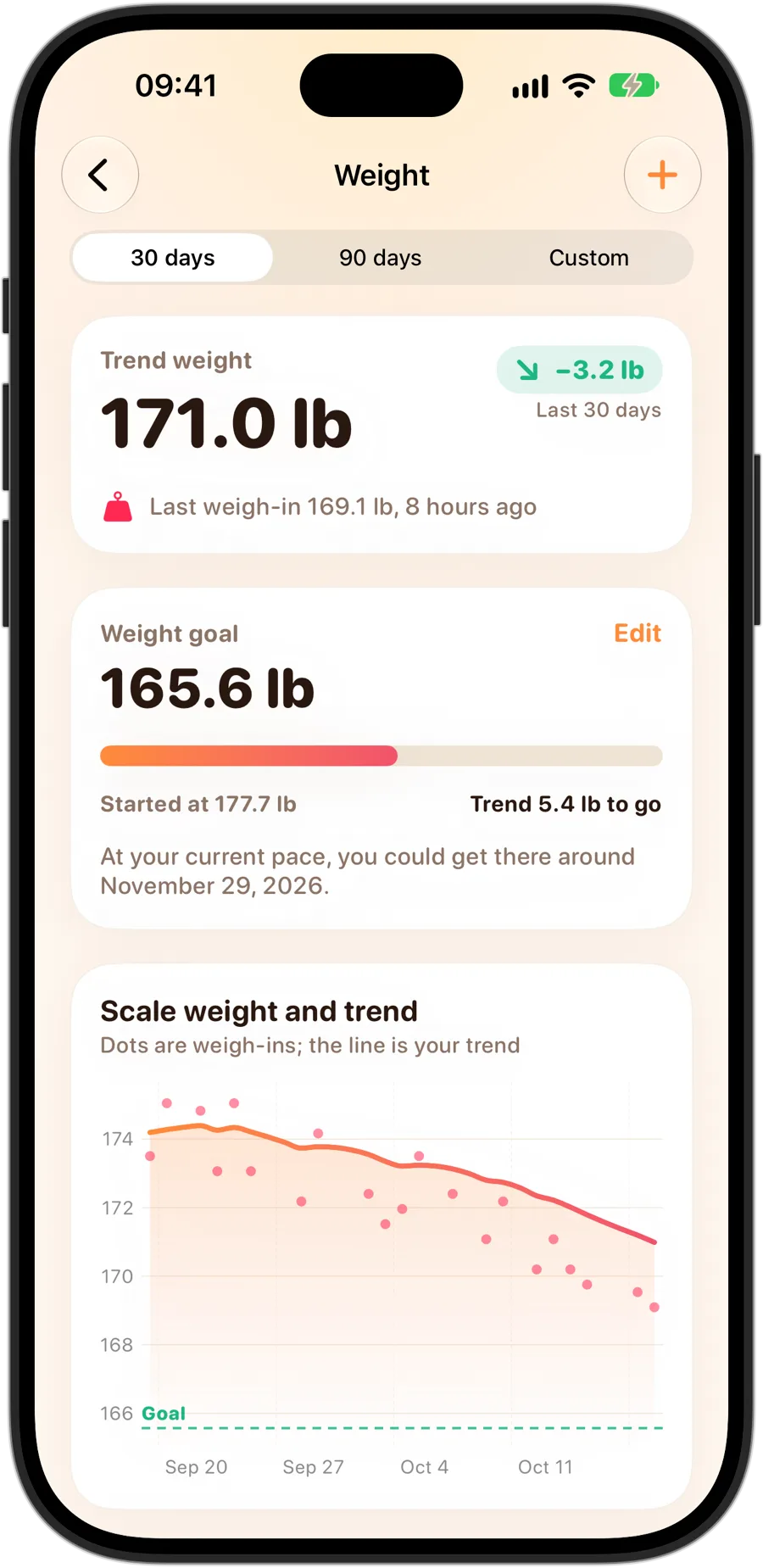
dieting.app is general information, not medical advice. If you are pregnant or breastfeeding, have diabetes, kidney disease or a history of eating disorders, or take medication, talk to your doctor before changing how you eat.